
The $50,000 Drone That Can Drain America’s Missile Arsenal

Originally posted in The Geopolitical Economist. March 26, 2026.

Cheap, mass-produced drones are forcing the launch of multi-million-dollar interceptors and exposing a growing vulnerability in modern air defense: missile inventories can be exhausted faster than they can be replaced.

An anti-missile system operates on April 14 after Iran launched drones and missiles towards Israel. 
Amir Cohen/Reuters

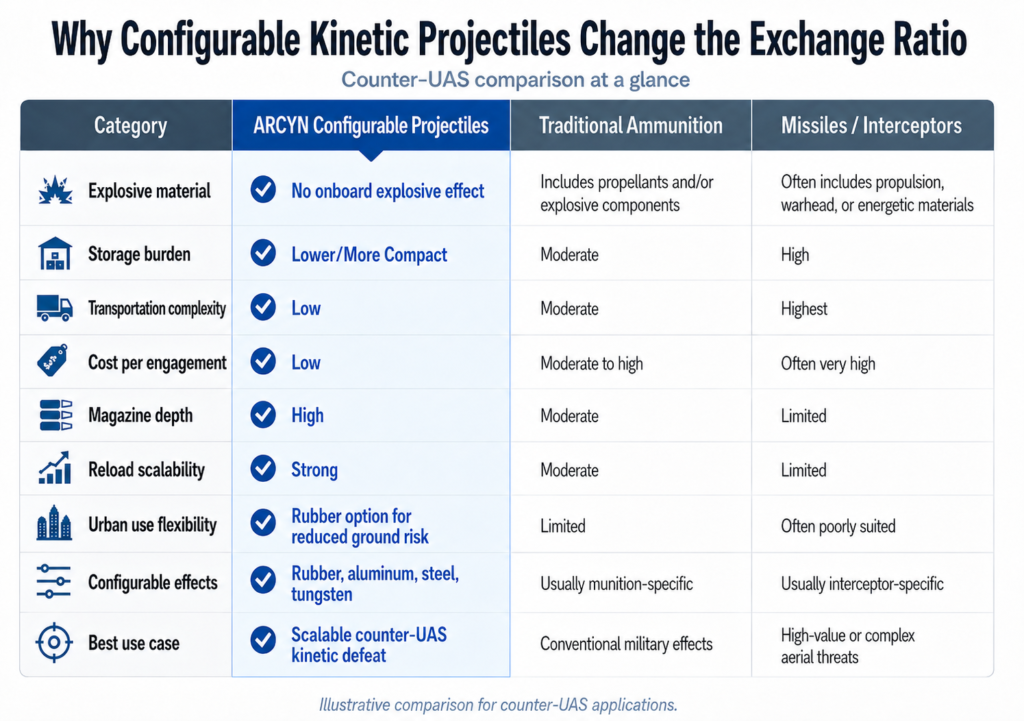
A $50,000 drone is forcing the United States to fire $4 million missiles.

That is not a sustainable way to fight a war.

Across the Middle East and beyond, inexpensive drones are exposing a critical weakness in modern air defense: missile inventories can be drained faster than they can be replaced.

Recent Iranian strikes across the Gulf illustrate the emerging dynamic. Over the course of the campaign, Iran launched well over a thousand drones and hundreds of missiles against U.S. and allied targets across the region. Many of these systems were intercepted by layered air defenses. Others penetrated those defenses and struck military installations, infrastructure, and areas near diplomatic facilities, including locations near the U.S. consulate in Dubai.

Some of the most consequential impacts targeted the sensors and communications infrastructure that underpin the region’s missile defense architecture. One strike damaged the AN/FPS-132 early-warning radar at Al Udeid Air Base in Qatar, one of the most important long-range missile warning sensors supporting U.S. operations in the region. A single drone took out a $1.1-billion-dollar radar.

Another attack appears to have knocked out an AN/TPY-2 radar associated with a U.S. THAAD missile defense battery at Muwaffaq Salti Air Base in Jordan. Systems of this type represent some of the most advanced radar platforms deployed by the United States and its partners and typically cost hundreds of millions of dollars to field. Iranian strikes also damaged facilities and satellite communications assets at the U.S. Fifth Fleet headquarters in Bahrain.

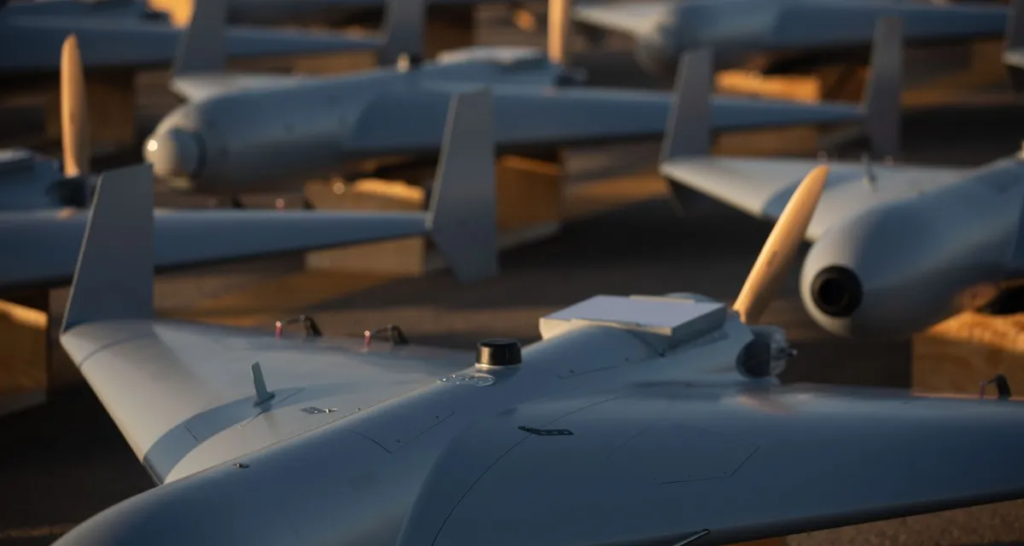
The aircraft responsible for many of these attacks are variants of the Shahed-136, a loitering munition designed for large-scale production. Their design emphasizes affordability and scale rather than technological sophistication, and most estimates place their cost somewhere between $20,000 and $50,000 per aircraft.

The systems used to stop them exist in an entirely different economic category. U.S. and allied forces rely heavily on the PAC-3 Patriot interceptor to defeat incoming drones and missiles, and each interceptor costs roughly $4 million. When an inexpensive drone compels the launch of a missile worth several million dollars, the defender is forced into a deeply unfavorable exchange.

Cost is only part of the problem. The deeper issue is volume. Drone warfare favors scale, allowing attackers to launch large numbers of inexpensive aircraft simultaneously.

Air defense networks must engage each incoming threat, forcing defenders to expend interceptors repeatedly during sustained attacks.

Every interceptor fired reduces the number available for other threats, including ballistic missiles, cruise missiles, and manned aircraft. The result is a strategic dynamic that military planners increasingly describe as magazine warfare.

The concept is not entirely new. During the Second World War, Allied air planners recognized that sustained bombing campaigns could overwhelm German air defenses not only by destroying targets, but by exhausting interceptor aircraft, pilots, and anti-aircraft ammunition. What is different today is the scale at which relatively inexpensive unmanned systems can be produced and deployed.

In magazine warfare, the objective is not necessarily to destroy the defender’s infrastructure immediately. Instead, the goal is to drain the defender’s ammunition inventory faster than it can be replenished. Missile inventories are finite, and production lines for advanced interceptors move slowly. Manufacturing complex missile systems often takes months or years, particularly when specialized components and constrained supply chains are involved.

Cheap drones, by contrast, can be produced in very large numbers. When an attacker can manufacture thousands of inexpensive aircraft while the defender relies on a limited stock of expensive interceptors, the balance of attrition begins to shift. Over time, the contest becomes less about the performance of individual weapons systems and more about production capacity, cost efficiency, and inventory depth.

In that environment, inexpensive drones become tools of attrition, designed to drive the expenditure of far more valuable defensive systems. Each launch forces a tradeoff between preserving limited interceptor inventory and accepting greater operational risk.

The strategic implications are severe. If defenders exhaust their interceptors during sustained drone attacks, the remaining missile defenses may no longer be available to counter more advanced threats. Once those magazines begin to empty, the balance of air power can shift rapidly in favor of the attacker.

The rise of inexpensive, mass-produced drones is therefore reshaping the economics of air defense. The contest is no longer defined solely by the sophistication of individual weapons systems, but by the broader relationship between production capacity, cost, and inventory.

Modern air defense was built around the assumption that advanced weapons would be relatively scarce. Drone warfare is overturning that assumption.

The question is no longer whose missiles are better.

It is whose defenses fail first when the missiles run out.

Dr. Aaron Poynton is an entrepreneur and national security strategist focused on artificial intelligence and emerging defense technologies. He serves as CEO of Arcyn Defense, a company developing next-generation counter-drone systems. He is also Executive Director of the American Society for Artificial Intelligence (ASFAI). Views expressed are his own.

ARCYN Defense™ Closes Seed Round to Build Next-Generation Defense Systems

ARCYN Defense Closes Seed Round to Build Next-Generation Defense Systems

ARCYN Defense has closed its seed financing round to accelerate development of next-generation air and counter-threat defense systems designed for modern, contested battlefields. Formerly Marteos Industries, the company is advancing an edge-AI-enabled, kinetic defense platform focused on precision, resilience, and affordability at scale. ARCYN is preparing its minimum viable product for upcoming demonstrations with the U.S. Department of War and has assembled a seasoned leadership team and advisory board of senior military and space operations leaders. The company aims to redefine the economics of air defense in response to rapidly proliferating, low-cost threats.

Continue reading

Civilian Infrastructure in the Drone Era

Civilian Infrastructure in the Drone Era

Temporary airspace closures over El Paso disrupted commercial aviation and regional commerce. The 2019 strikes on Saudi Arabia’s Abqaiq and Khurais facilities removed over five percent of global oil supply in a matter of hours. The 2018 attempted assassination in Caracas demonstrated the viability of explosive-equipped drones in civilian settings.

Continue reading

Swarms and Coordinated Autonomy

Swarms and Coordinated Autonomy

Single-drone detection is manageable. Coordinated activity compresses timelines and strains throughput. Multiple low-RCS objects operating simultaneously increase track management load and classification demand.

Continue reading

From Battlefield to Boardroom

From Battlefield to Boardroom

Corporate facilities increasingly operate inside contested airspace, even when they do not recognize it. Industrial campuses and energy plants are visible from above. Distribution hubs reveal logistics patterns. R&D centers expose physical layouts and workflow cadence. Drones allow remote observation without physical trespass.

Continue reading

The New Air Superiority

The New Air Superiority

Air superiority is increasingly determined within the first 1,000 to 1,500 feet above ground level. That airspace sits directly over refineries, substations, data centers, ports, and urban infrastructure. It is dense, cluttered, and historically under-monitored.

Continue reading